 Reinhard WimmerCruise DirectorEntertainer
UNESCO World Heritage
The Danube Delta
A unique wetland of roughly 5,600 square kilometres where the Danube meets the Black Sea.
Biosphere reserve
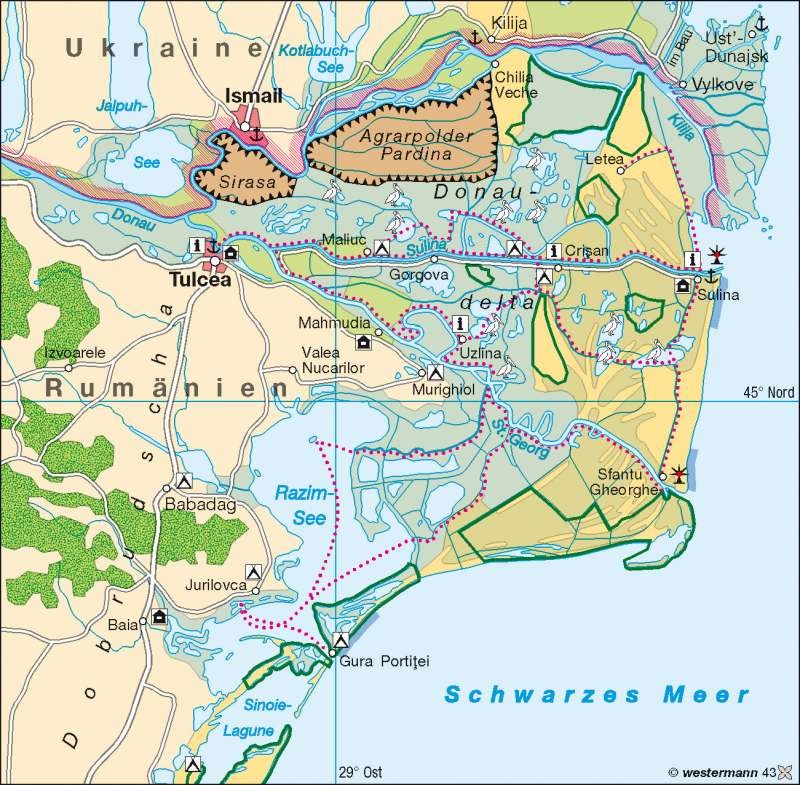
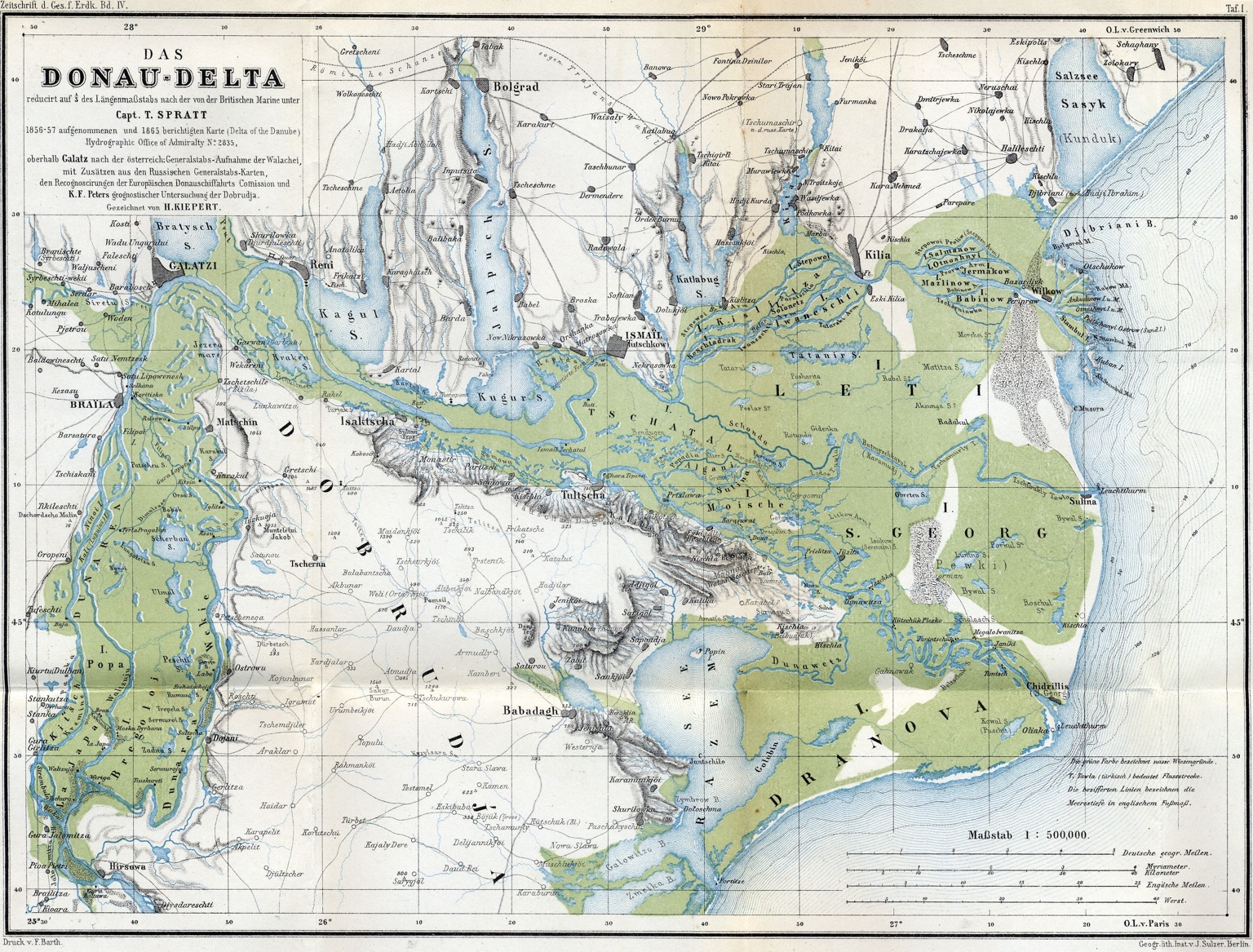
The Danube flows into the Black Sea through a fan-shaped delta covering around 5,600 km² in the Romanian-Ukrainian border region.
The delta marks the beginning of an international waterway connecting Ukraine, Romania, Moldova, Bulgaria, Serbia, Croatia, Hungary, Slovakia, Austria and Germany.
The delta as a biosphere reserve
The Danube is South-Eastern Europe’s most important receiving river, collecting the major rivers of the Eastern Alps (Inn and Drava), the Carpathians (Tisza) and the eastern Dinarides (Sava).
In the delta, the water divides between three major branches: Chilia (approx. 60 percent), St George (approx. 30 percent) and Sulina (approx. 10 percent). The river, navigable from its mouth to Regensburg, now plays only a limited role in passenger and freight transport.
This area is remote from both the Romanian and Ukrainian perspective and very sparsely populated, with around 3.5 inhabitants per square kilometre. It is considered Europe’s largest wetland and an important refuge for countless plant and animal species.
The vast estuary is dominated by extensive reed beds. Driven by the current, floating reed islands move through this amphibious landscape, which is constantly changing.
The waterways are bordered by natural levees, which are flooded whenever high water occurs.
In winter, when continental north-easterly winds bring icy cold, the waterways often freeze for weeks.
In February, for example, temperatures can fall to minus 30 degrees. Despite these harsh winters, the delta’s waterways, swamp forests, dunes and meadows provide a habitat for many birds, including ducks, pelicans, herons and white-tailed eagles, as well as numerous fish, amphibians and insects, wildcats and martens. In 1991, this unique ecosystem was declared a UNESCO World Heritage Site.